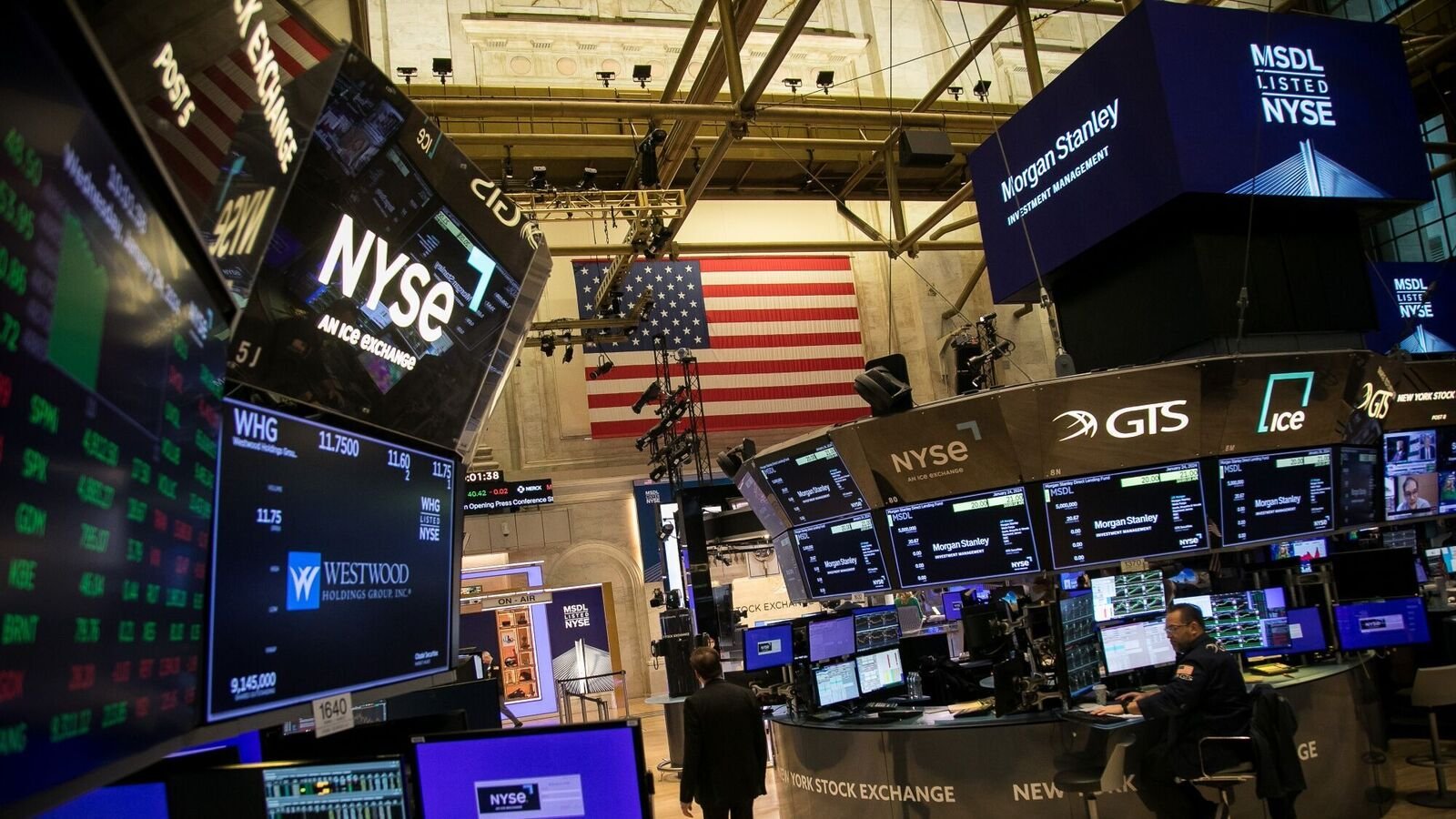
Understanding the complete journey of a trading day on Wall Street
By The Worldonomics Times
The US stock market is one of the most influential financial markets in the world. Every trading day, millions of investors, traders, institutions and companies participate in buying and selling shares through major exchanges such as the New York Stock Exchange (NYSE) and Nasdaq.
For a new investor, however, the market can appear complicated. What actually happens between the opening bell and the closing bell? Who places orders? How are stock prices determined? What happens before the market opens and after it closes?
Understanding the structure of a trading day is an important first step for anyone interested in investing or trading in US stocks.
1. Before the Opening Bell: The Market Prepares
The US regular stock-market session generally begins at 9:30 a.m. Eastern Time (ET) and ends at 4:00 p.m. ET, Monday through Friday, excluding market holidays.
But activity starts well before 9:30 a.m.
During the pre-market session, investors can react to overnight developments, including corporate announcements, earnings reports, economic data, analyst updates and international market movements.
For example, if a major technology company announces unexpectedly strong earnings before the opening bell, investors may place buy orders before regular trading begins. This can influence the stock’s opening price.
However, pre-market trading generally has lower liquidity and can experience wider bid-ask spreads and greater price volatility than regular trading.
2. The Opening Bell: 9:30 a.m. ET
At 9:30 a.m. ET, regular trading begins.
The opening price of a stock is determined through the exchange’s order-matching process. Buyers submit bids indicating what they are willing to pay, while sellers submit offers indicating the prices at which they are willing to sell.
When compatible buy and sell orders meet, a transaction takes place.
The opening period can be particularly volatile because large numbers of orders accumulated before the market opens may be executed around the same time.
This is why the first few minutes of trading can sometimes produce significant price movements.
3. The Trading Engine: Buyers Meet Sellers
At the heart of the stock market is a simple principle: buyers and sellers interact through an electronic marketplace.
Suppose an investor wants to buy 100 shares of a company. They can place different types of orders.
A market order generally seeks immediate execution at the best available price.
A limit order specifies the maximum price a buyer is willing to pay or the minimum price a seller is willing to accept.
The exchange and market infrastructure work to match compatible orders according to established rules.
Stock prices therefore change continuously as investors reassess the value of companies and as supply and demand change.
4. What Moves Stock Prices During the Day?
Stock prices can change for many reasons.
Some of the most important factors include:
| Factor | Possible Market Impact |
|---|---|
| Company earnings | Can influence expectations about future profits |
| Economic data | Can change expectations about economic growth |
| Federal Reserve decisions | Can affect interest rates and valuations |
| Inflation | May influence consumer spending and monetary policy |
| Corporate announcements | Can create immediate buying or selling interest |
| Global events | Can affect investor confidence and risk appetite |
| Investor sentiment | Can accelerate market movements |
Importantly, a stock does not move simply because a company is making money. Investors are constantly comparing a company’s actual performance with their expectations.
5. The Middle of the Trading Day
After the initial opening volatility, trading activity may stabilize during parts of the day. Institutional investors, mutual funds, hedge funds, pension funds and individual investors continue to place orders.
News can arrive at any moment.
For example, an unexpected economic announcement at 1:00 p.m. ET can cause markets to move rapidly even if trading had been relatively calm earlier.
This continuous flow of information is one reason the stock market is dynamic.
6. The Closing Bell: 4:00 p.m. ET
At 4:00 p.m. ET, the regular US stock-market session ends.
The closing price is particularly important because it is widely used by investors, financial websites, analysts and portfolio managers to evaluate daily performance.
However, the end of regular trading does not necessarily mean all market activity stops.
7. After the Closing Bell: After-Hours Trading
After regular trading ends, investors may participate in the after-hours session.
Companies frequently release quarterly earnings reports after the regular market closes. These announcements can cause substantial price movements during after-hours trading.
However, after-hours markets can have lower liquidity and greater volatility. Prices may also change significantly between the previous day’s close and the next morning’s opening.
Therefore, investors should understand that the closing price is not necessarily the price at which a stock will open the following day.
8. From One Trading Day to the Next
The US market operates as a continuous cycle:
Pre-Market → Opening Bell → Regular Trading → Closing Bell → After-Hours → Next Trading Day
Meanwhile, financial markets outside the US continue operating. Developments in Asia, Europe, currencies, commodities and global economic conditions can influence expectations for the next US trading session.
For Indian investors, this global connection is particularly important. Changes in the US market can influence sentiment in Indian markets, while movements in the US dollar, interest rates and global risk appetite can affect international investment decisions.
9. Investing vs Trading
Understanding the trading day is useful, but investors should distinguish between investing and short-term trading.
An investor may purchase shares because they believe a company’s business will grow over several years.
A trader may instead attempt to benefit from shorter-term price movements.
Neither approach guarantees profits. Short-term trading can involve significant volatility and requires strong understanding of risk management, order types, market liquidity and trading psychology.
10. Why Understanding the Trading Day Matters
For beginners, knowing what happens from the opening bell to the closing bell provides a framework for understanding market movements.
It helps investors recognize why prices may move sharply at the opening, how news can influence stocks during the session, why earnings announcements can cause sudden movements and why after-hours prices may differ from the next day’s opening price.
The US stock market may appear complex, but its fundamental mechanism is straightforward: companies provide shares, investors place orders, exchanges facilitate transactions, and prices continuously adjust according to supply, demand, expectations and information.
Key Takeaway
The US stock market is not simply a place where shares are bought and sold. It is a sophisticated global financial ecosystem operating almost continuously around the regular trading session.
From the pre-market preparation to the 9:30 a.m. opening bell, through the flow of information during the trading day and finally to the 4:00 p.m. closing bell and after-hours session, every stage can influence investor decisions.
For anyone planning to participate in US markets, understanding this daily cycle is an essential foundation before moving on to topics such as stock selection, market indices, earnings analysis, ETFs, dividends and risk management.
The Worldonomics Times aims to make global financial markets easier to understand—helping readers learn, analyse and make more informed financial decisions.
Disclaimer: This article is for educational and informational purposes only and should not be considered investment, trading, tax or financial advice. Stock-market investments involve risk, including the possible loss of capital. Readers should conduct their own research and consult qualified professionals before making investment decisions.